


A contact lens case chandelier might sound like an unusual lighting design, but designer Klaus Rosburg has created something truly extraordinary from one of the most overlooked materials in our homes. Over the past four months here at upcycleDZINE, we’ve been diving deep into upcycle design, and one thing becomes increasingly clear: the most creative upcycled lighting designs emerge from the most unexpected sources. What fascinates us most is how designers transform everyday trash into fantastic works of art. Materials that would otherwise be discarded become stunning centerpieces, and this contact lens case chandelier is a perfect example of that magic.

Award-winning designer Klaus Rosburg, based in Brooklyn, NY, spent an astonishing seven years collecting the plastic packaging from his wife’s disposable contact lenses. His patience and creativity culminated in a breathtaking work titled Cnidaria: Creature of Light. This isn’t just any contact lens case chandelier—it’s a luminous sculpture that captures the ethereal beauty of jellyfish, the creatures the design is named after. Rosburg, President of Sonic Design, has made a career of developing innovative consumer electronics and structural packaging, but his passion for upcycled lighting design truly shines through in this project.
Crafting the Contact Lens Case Chandelier
The process of creating this contact lens case chandelier was as meticulous as it was time-consuming. Rosburg drilled, arranged, and rearranged hundreds of clear plastic cases, using 500 rivets to connect them into flowing chains that mimic the tentacles of a jellyfish. The designer’s previous work includes impressive pieces like a chandelier made from clear coat hangers and pendant lights crafted from colored clothespins—both of which have been featured in design publications and books worldwide. But the contact lens case chandelier represents something new: a material most people never consider as a design resource.

Why Contact Lens Cases?
The clear, translucent nature of the plastic cases is crucial to the design’s success. When light passes through the hundreds of stacked and interlocking cases, they create a luminous, weightless effect reminiscent of jellyfish floating through the ocean. Fascinated by the glow and mystery of these sea creatures, Rosburg captured their essence through this innovative contact lens case chandelier. Each case, ordinarily destined for the recycling bin or landfill, becomes part of a larger narrative about sustainability and creative reuse.
The Upcycled Lighting Design Movement
This project exemplifies why upcycled lighting design has become so popular among both designers and eco-conscious homeowners. Unlike typical recycling, which breaks materials down to their base components, upcycling transforms finished products into new creations of equal or greater value. The contact lens case chandelier demonstrates this perfectly—what starts as disposable packaging becomes a museum-quality art piece. Rosburg’s work has been recognized globally, proving that sustainable design doesn’t mean sacrificing beauty or innovation.
The Details That Matter
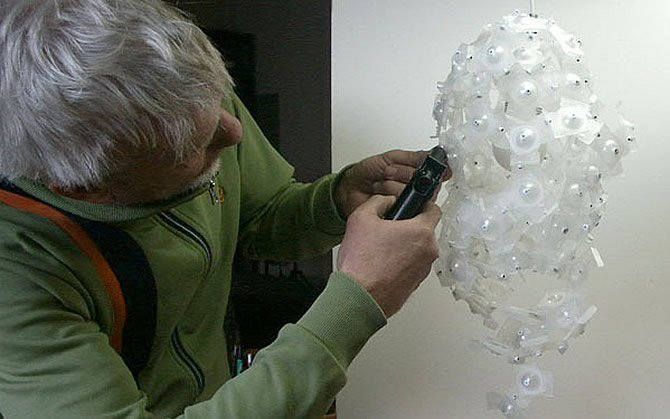
- 500 rivets holding the structure together
- Hundreds of clear contact lens cases collected over 7 years
- Jellyfish-inspired flowing design
- Hand-drilled and arranged by the designer
- Fully functional as a lighting fixture
Inspiration for Your Own Projects
If this contact lens case chandelier has sparked your imagination, it’s worth exploring what materials you might transform in your own upcycling journey. The lesson here is that the best upcycled designs often come from unexpected sources. Don’t overlook everyday packaging, old furniture, or discarded textiles. What Rosburg accomplished with contact lens cases, you might achieve with bottle caps, tin cans, old beads, or other household items destined for the trash. The key is seeing potential where others see waste.
For more inspiration, explore other sustainable living and DIY projects that transform waste into wonder. The upcycled lighting design community continues to prove that creativity and environmental consciousness make perfect partners.
Design by Klaus Rosburg
Since you’re here …
I have a small favor to ask. Thousands are visiting upcycleDZINE for upcycle design inspiration every month. Readers in more than 100 countries around the world are now able to support financially.
upcycleDZINE is a completely independent niche site, is very work-intensive, and offers tons of unique information for free.
To keep upcycleDZINE running, I’m asking you for your support.
Your contribution will allow me to:
– meet the hosting costs
– upgrade to keep track of traffic increases
– add new content, and keep improving the older content
– add new functionalities to this site
– improve how it works and how it looks
– and last but not least, my daily dose of coffee 🙂
Again, all contributions will be reinvested into the aforementioned associated costs of running this blog and will help ensure the ongoing quest for quality upcycle design.
Your kindness and generosity will be greatly appreciated and will give me the motivation to continue.
Every contribution, however big or small, is so valuable for the future of upcycleDZINE.
Support today from as little as $2 – it only takes a minute. Thank you.



















Good replies in return of this difficulty with firm arguments and telling everything about that
“First off I want to say awesome blog! I had a quick question that I’d like to
ask if you don’t mind. I was interested to know how you center yourself and clear
your head before writing. I’ve had a hard time clearing my
thoughts in getting my thoughts out. I do take pleasure in writing but it just
seems like the first 10 to 15 minutes are generally
lost simply just trying to figure out how to begin. Any recommendations or tips?
Appreciate it!”
Hi Rose, thank you for visiting upcycleDZINE and for asking your question. What you describe is very recognizable. I stumbled upon a few months ago on the “Free-writing” technique. You take a blank piece of paper, no computer. You need to write on paper because that stimulates your creative brain. And then you start to free-write for 10 minutes about things that pop up in your mind. If there’s nothing, you write that down. But very important is to keep writing and don’t correct what you write. Try to have a topic to write about. You’ll be amazed what the result is after time’s up. Of course you still need to write your post/blog/article. But at least you’ve got something to start with. Here’s a link to a short piece on free-writing. Let me know if it works for you. Good luck and success. Regards, Gilbert https://bit.ly/2sXELYi