

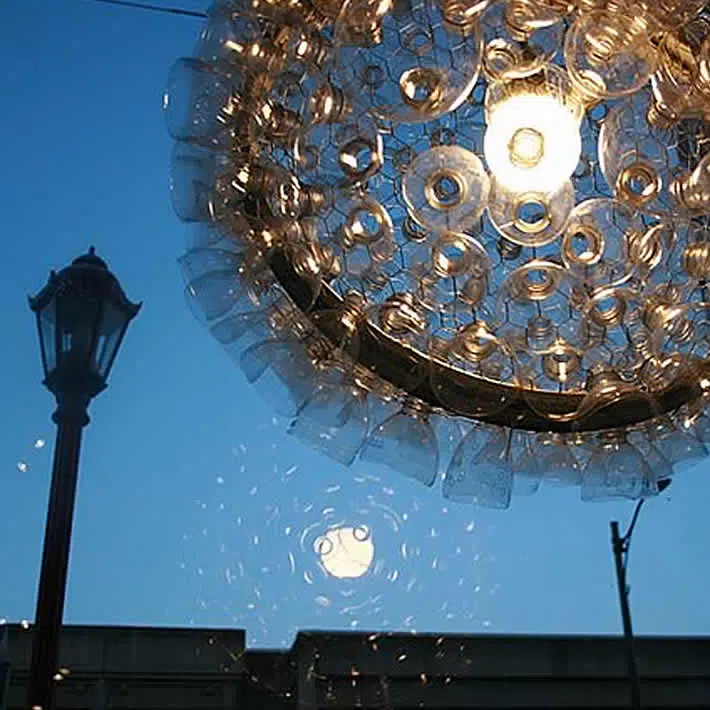
Creating a stunning DIY plastic bottle chandelier doesn’t require expensive materials or professional training—just creativity and resourcefulness. The 150 Litre Chandelier by Organelle Design proves exactly that. This mesmerizing ball of light showcases how everyday items like plastic bottles, galvanized poultry wire, bike rims, and zip ties can transform into something truly spectacular. If you’re looking for your next ambitious upcycling project, this plastic bottle chandelier design offers incredible inspiration for sustainable home décor.
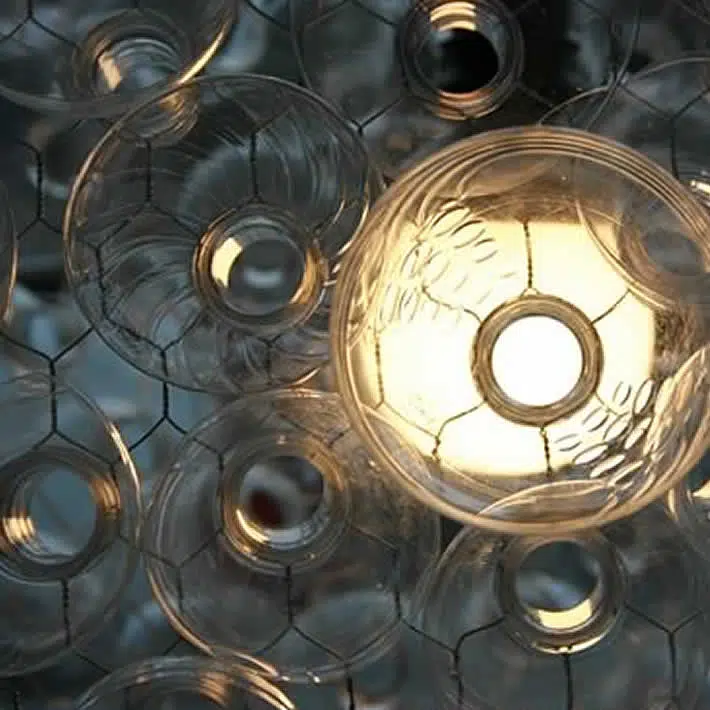
The 150 Litre Chandelier emerged from a volunteer-based project with the Vancouver Women’s Health Collective in partnership with UBC SALA. What started as a community initiative became a stunning example of collaborative design and sustainable living. The beauty of this approach lies in its simplicity—Organelle Design, an independent design studio based in Vancouver, BC, Canada, took readily available materials and created something that rivals high-end lighting fixtures.
This isn’t the first time Organelle Design has impressed us with innovative upcycling. Previously, they created the Hangelier 2.1, another brilliant chandelier made from wooden hangers. But the plastic bottle chandelier takes their philosophy even further by demonstrating how many different materials can be repurposed into functional art.
Materials You’ll Need for Your Own Plastic Bottle Chandelier
The genius of this design is how accessible the materials are. You likely have some of these items already, or can source them easily:
- PET plastic bottles (the clear kind used for beverages)
- Galvanized poultry wire
- Bike rims (old ones headed for recycling)
- Heavy-duty zip ties
- LED string lights or bulbs for illumination
The beauty of a plastic bottle chandelier project is its flexibility. You can adjust the size, color scheme, and brightness based on your space and available materials.
Why Choose a DIY Plastic Bottle Chandelier?
Beyond the obvious sustainability benefits, there are several reasons why a plastic bottle chandelier makes an excellent choice for eco-conscious decorators:
- Cost-effective: Most materials are free or incredibly cheap since you’re using items destined for the landfill
- Customizable: Size it up or down based on your space and how many bottles you can collect
- Conversation starter: A plastic bottle chandelier draws attention and sparks discussions about sustainable living
- Learning opportunity: Perfect for group projects or teaching others about upcycling
- Environmentally responsible: Keeps plastic out of landfills while creating functional art
Building Your Own Plastic Bottle Chandelier
While the 150 Litre Chandelier is a complex undertaking, the basic concept can be scaled to your skill level. Start by collecting clean PET plastic bottles—the same kind you get soft drinks in. The translucent quality of these bottles creates that beautiful glow when backlit.
The structural framework uses galvanized poultry wire shaped into spherical or geometric forms. Zip ties secure the bottles in place while maintaining flexibility in the design. A bike rim or multiple rims can serve as anchor points for weight distribution and structural integrity.
Lighting is where the magic happens. Modern LED string lights make this project energy-efficient and safe compared to older incandescent options. The plastic bottles diffuse the light beautifully, creating warm ambient illumination perfect for any room.
Community and Collaboration
What makes the original 150 Litre Chandelier project particularly inspiring is its community spirit. Many individuals and organizations donated services and funds to support the design and build initiative. This demonstrates how upcycling projects can bring people together around shared values of sustainability and creative reuse.
Whether you’re tackling this as a solo project, a family activity, or a community effort, a plastic bottle chandelier represents more than just a lighting fixture—it’s a statement about conscious consumption and the potential hidden in discarded materials.
Design by Organelle Design
Since you’re here …
I have a small favor to ask. Thousands are visiting upcycleDZINE for upcycle design inspiration every month. Readers in more than 100 countries around the world are now able to support financially.
upcycleDZINE is a completely independent niche site, is very work-intensive, and offers tons of unique information for free.
To keep upcycleDZINE running, I’m asking you for your support.
Your contribution will allow me to:
– meet the hosting costs
– upgrade to keep track of traffic increases
– add new content, and keep improving the older content
– add new functionalities to this site
– improve how it works and how it looks
– and last but not least, my daily dose of coffee 🙂
Again, all contributions will be reinvested into the aforementioned associated costs of running this blog and will help ensure the ongoing quest for quality upcycle design.
Your kindness and generosity will be greatly appreciated and will give me the motivation to continue.
Every contribution, however big or small, is so valuable for the future of upcycleDZINE.
Support today from as little as $2 – it only takes a minute. Thank you.