


Bicycles are incredible sources of upcycled materials, and bicycle parts hunting trophy designs showcase this perfectly. Austrian designer Andreas Scheiger has created something truly special: the ‘Upcycle Fetish’—a collection of handcrafted hangers built entirely from discarded bicycle parts like stems, saddles, and handlebars. These functional art pieces blend the sculptural inspiration of Pablo Picasso’s famous ‘Bull Head’ with a hunting trophy aesthetic, creating decorative hangers that are both visually striking and purposefully designed to hold everyday objects securely on your wall.
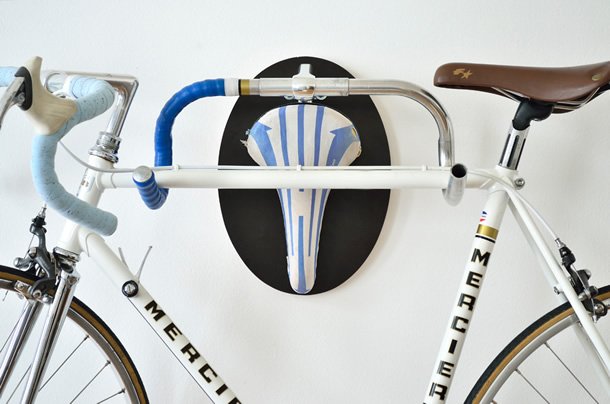
The journey began at a bicycle flea market, where Scheiger discovered an abundance of discarded materials waiting for new life. He started collecting abandoned saddles, stems, and handlebars from dumps, scrap dealers, and used bike workshops—components that would otherwise end up in landfills. What started as a collection quickly transformed into creative inspiration when Scheiger realized the sculptural potential of these everyday bicycle components.
Scheiger drew inspiration from Pablo Picasso’s iconic ‘Cabeza de Toro’ (Bull Head) sculptures, which famously used found objects to create art. However, instead of creating purely decorative sculpture, Scheiger wanted his pieces to serve a dual purpose: providing both visual impact and practical functionality. The result is a brilliant fusion of art history and sustainable design—a bicycle parts hunting trophy hanger that looks like it belongs in a grand hall while actually being a hardworking storage solution.
From Concept to Creation: The Design Process

Creating these hangers wasn’t simply about bolting parts together. Scheiger invested in a Bosch router to mill custom mounting plates from reclaimed wood scraps, adding another layer of sustainability to the project. The process involved meticulous cleaning, cutting, screwing, and filing of each bicycle component to ensure both aesthetic appeal and structural integrity. Each finished hanger is engineered to carry heavy loads safely, making them far more than decorative wall art.
The clever thing about this approach is that not all bicycle parts worked equally well. Some stems and handlebars proved unsuitable for hanging, so Scheiger adapted his design accordingly. This problem-solving mindset is exactly what the upcycling community thrives on—taking limitations and transforming them into creative opportunities. The result is an array of unique bicycle parts hunting trophy pieces, each with its own personality while maintaining the same robust, artistic aesthetic.
Why This Bicycle Hanger Design Works
There’s something genuinely clever about mixing Picasso’s artistic vision with the hunting trophy tradition. The bull head form immediately reads as bold and sculptural, while the weathered bicycle components give it authenticity and history. These aren’t slick, mass-produced pieces—they’re individual creations with soul. Each hanger tells a story of redemption, transforming forgotten bicycle parts into celebrated wall art.
Beyond aesthetics, these hangers demonstrate that upcycled bicycle parts can solve real design challenges. Homeowners and apartment dwellers can now hang coats, bags, keys, and other everyday items on functional art that sparks conversation. Visitors won’t just see a hook; they’ll see the clever intersection of sustainability, craftsmanship, and inspiration drawn from art history.
Getting Started with Your Own Bicycle Parts Projects

If Scheiger’s work inspires you to explore upcycled bicycle projects, start by collecting components. Visit local bike shops, scrap yards, and flea markets. Saddles, handlebars, and chains are particularly versatile. Clean them thoroughly, plan your design, and consider how you’ll mount them. You don’t necessarily need expensive tools—many makerspaces and community workshops have routers and other equipment available for member use.
The beauty of upcycling bicycle parts is that there’s no single “right” answer. Scheiger’s hunting trophy aesthetic is just one direction. You could create minimalist DIY bicycle wall art, decorative sculptures, planters, mirrors, or storage solutions. The constraint of working with found materials often leads to the most innovative designs.
Final Thoughts
Andreas Scheiger’s ‘Upcycle Fetish’ collection proves that sustainable design doesn’t mean sacrificing style or quality. By combining discarded bicycle components with artistic vision and solid craftsmanship, he’s created pieces that inspire and function. Whether you’re drawn to the hunting trophy aesthetic or simply fascinated by creative bicycle upcycling, these hangers remind us that some of the best design solutions come from reimagining what we already have.
Design by Andreas Scheiger
Since you’re here …
I have a small favor to ask. Thousands are visiting upcycleDZINE for upcycle design inspiration every month. Readers in more than 100 countries around the world are now able to support financially.
upcycleDZINE is a completely independent niche site, is very work-intensive, and offers tons of unique information for free.
To keep upcycleDZINE running, I’m asking you for your support.
Your contribution will allow me to:
– meet the hosting costs
– upgrade to keep track of traffic increases
– add new content, and keep improving the older content
– add new functionalities to this site
– improve how it works and how it looks
– and last but not least, my daily dose of coffee 🙂
Again, all contributions will be reinvested into the aforementioned associated costs of running this blog and will help ensure the ongoing quest for quality upcycle design.
Your kindness and generosity will be greatly appreciated and will give me the motivation to continue.
Every contribution, however big or small, is so valuable for the future of upcycleDZINE.
Support today from as little as $2 – it only takes a minute. Thank you.
















I absolutely LOVE these – clever, original, attractive and functional!
This is really a space saver and great Idea. I was thrilled to see this one. Thank You! We will make one I am sure,