

Traffic sign furniture is one of the most creative and visually striking ways to upcycle discarded materials. If you’re a graphic designer or sustainability enthusiast like us, you’ll love how traffic sign furniture transforms worn street signs into functional art. We first discovered these stunning pieces created by American artist, sculptor, jeweler and industrial designer Boris Bally, and we’ve been inspired ever since. His ‘Broadway Armchair’ and ‘Transit Chair’ showcase exactly why traffic sign furniture has become such a popular upcycling trend among designers and DIY makers.
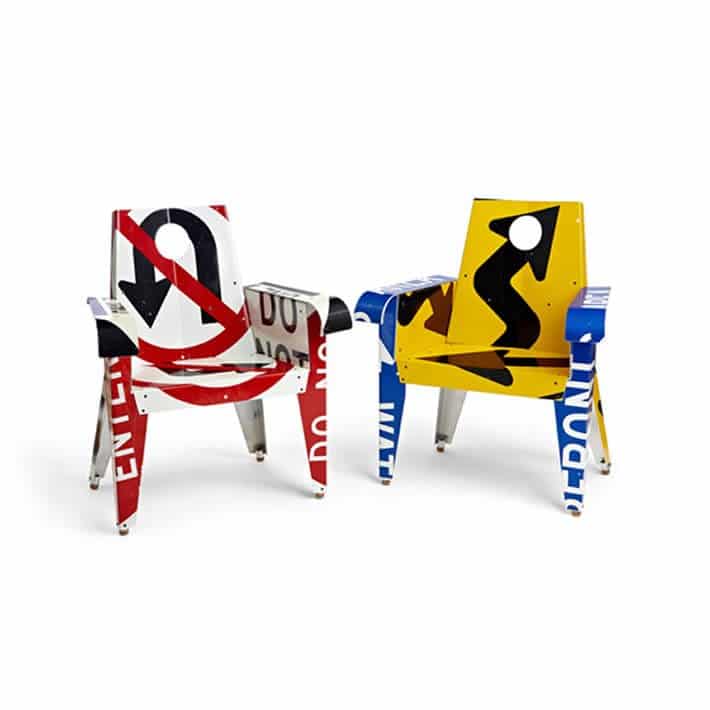
What makes traffic sign furniture so special is that no two pieces are exactly alike. Each recycled traffic sign carries the unique markings, wear patterns, and character from years of use on the street. This authentic patina can’t be replicated—it’s part of the material’s story. The colors are bold and graphic, the text is eye-catching, and the visual impact is undeniable. For anyone interested in sustainable home decor, traffic sign furniture delivers both style and eco-consciousness.
Design Features That Make It Work
Boris Bally’s approach to traffic sign furniture is thoughtful and refined. The ‘Broadway Armchair’ and ‘Transit Chair’ aren’t just raw metal pieces—they’re professionally finished furniture that respects both form and function. Here are the key design elements that make his work exceptional:
- Recycled champagne corks are inserted on the bottom of all chair and table legs. These protect your floors from scratches and provide added stability to the finished piece.
- Smooth, rounded edges throughout ensure comfort and safety. Every edge is finished to a smooth surface, so you won’t catch clothing or skin on sharp corners.
- Authentic patina from years of street use creates one-of-a-kind visual interest that you simply can’t buy new.
- Bold graphic design means traffic sign furniture works as both functional seating and statement art in any room.
Getting Started with Your Own Traffic Sign Furniture
If you’re interested in creating traffic sign furniture for your own home or as gifts, here’s what to consider. Start by sourcing authentic recycled traffic signs from local salvage yards, demolition sites, or online marketplaces. Look for signs with interesting colors and clear markings. The structural integrity is crucial—avoid signs that are severely rusted or bent beyond repair.

Once you have your materials, you’ll need basic metalworking tools and skills. Consider taking a welding class if you’re new to working with metal. Safety is paramount when working with metal edges and tools. If DIY metalwork isn’t your comfort zone, you can commission custom traffic sign furniture from professional makers like Boris Bally, or collaborate with a local artist.
From Street Signs to Home Decor
The beauty of traffic sign furniture lies in its ability to bridge industrial design with everyday comfort. A chair made from a genuine stop sign or yield sign becomes an instant conversation starter. It’s sustainable, it’s artistic, and it tells a story. Every time someone sits on your traffic sign furniture, they’re sitting on a piece of urban history that would otherwise end up in a landfill.
Whether you’re drawn to this concept for environmental reasons, aesthetic appeal, or simply the coolness factor, traffic sign furniture represents everything we love about upcycling. It takes materials that have served their original purpose and gives them a second life as functional art. It’s innovative, colorful, and fun—exactly what sustainable living should be.
Exploring Similar Upcycling Projects
If you love the idea of traffic sign furniture, you might also enjoy exploring other upcycled furniture projects that transform industrial materials into home treasures. The principles are the same: source responsibly, design thoughtfully, and create something beautiful and functional from what others discard.
Design by Boris Bally
Since you’re here …
I have a small favor to ask. Thousands are visiting upcycleDZINE for upcycle design inspiration every month. Readers in more than 100 countries around the world are now able to support financially.
upcycleDZINE is a completely independent niche site, is very work-intensive, and offers tons of unique information for free.
To keep upcycleDZINE running, I’m asking you for your support.
Your contribution will allow me to:
– meet the hosting costs
– upgrade to keep track of traffic increases
– add new content, and keep improving the older content
– add new functionalities to this site
– improve how it works and how it looks
– and last but not least, my daily dose of coffee 🙂
Again, all contributions will be reinvested into the aforementioned associated costs of running this blog and will help ensure the ongoing quest for quality upcycle design.
Your kindness and generosity will be greatly appreciated and will give me the motivation to continue.
Every contribution, however big or small, is so valuable for the future of upcycleDZINE.
Support today from as little as $2 – it only takes a minute. Thank you.