


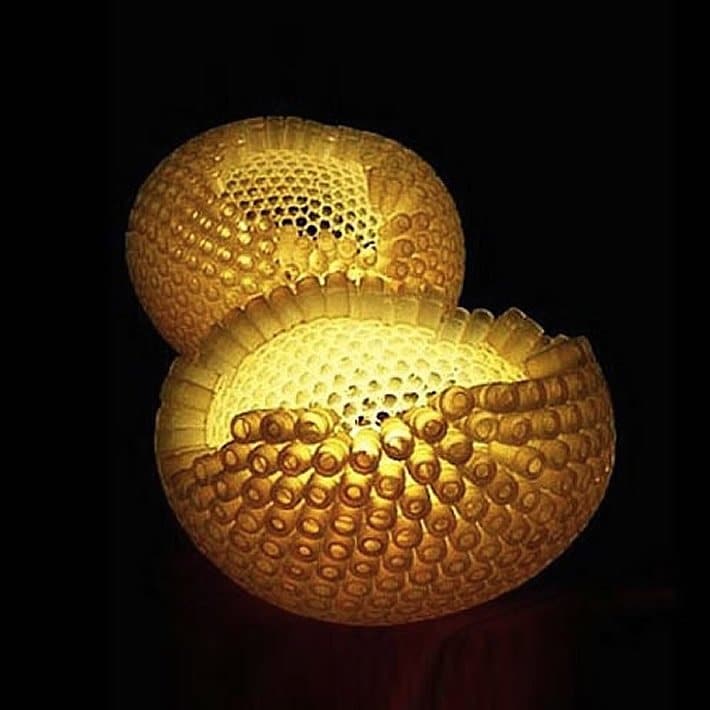
When I first discovered the Nourishment Floor Lamp, I was completely mesmerized by its beauty and elegant shape. This plastic bottle floor lamp is a perfect example of how creative upcycling can transform everyday household waste into functional art. Although the design dates back to 2011, this innovative approach to sustainable lighting deserves far more attention than it’s received. The story behind this plastic bottle floor lamp begins with an inspiring design competition that challenged creators to reimagine eco-friendly lighting.
The Design Competition That Started It All
To showcase the vast potential of LED lighting innovation, the green design website Inhabitat partnered with lighting brand Philips to launch the first-ever Bright Ideas Lighting Design Competition in May 2011. The competition invited designers to submit inspiring examples of eco-friendly lamps that made smart use of materials and incorporated low-energy LED replacement bulbs. The goal was simple yet powerful: encourage sustainable design that didn’t compromise on style or function.
How the Nourishment Floor Lamp Was Created
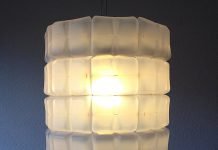
Designer Carolyn Joan Lau’s plastic bottle floor lamp won the prestigious People’s Choice Award, and it’s easy to see why. The genius of this design lies in its radical simplicity and resourcefulness. Carolyn sourced materials directly from her own kitchen—a place where most household waste originates. The Nourishment Floor Lamp is constructed entirely from yakult bottles (those small plastic yogurt drink containers we all throw away) and plastic tyreps, which are corrugated plastic strips.
The assembly process is beautifully straightforward: plastic bottles are perforated at their ends and simply connected together using the tyreps. This minimal construction approach creates a soft, diffused glowing effect that resembles a minimalist sculpture. What makes this plastic bottle floor lamp truly revolutionary is that it transforms what would otherwise end up in a landfill into an illuminated work of art that’s appreciated and displayed in homes.
The Message Behind the Design
The Nourishment Floor Lamp isn’t just beautiful—it tells a story about consumption and waste. By taking discarded materials and transforming them into something functional and gorgeous, the design encourages us to reconsider our relationship with everyday objects. Instead of automatically tossing plastic bottles into the trash, this project asks: “What if we could upcycle this into something we actually want to display?”
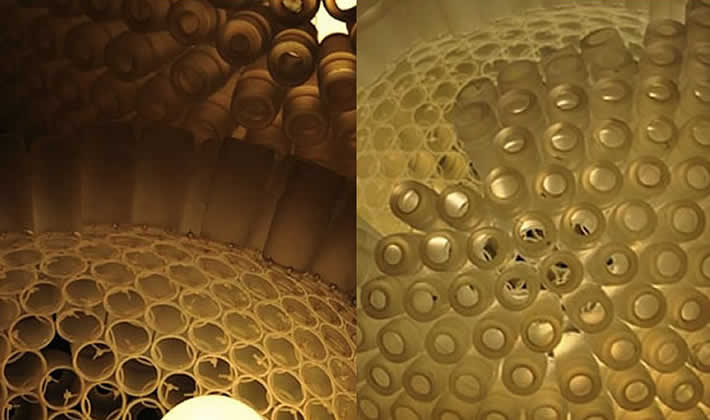
The simplicity of the design means anyone can create their own version. You’re not limited to yakult bottles and tyreps—the plastic bottle floor lamp concept works with virtually any suitable plastic container. Empty water bottles, milk jugs, or juice containers can all be repurposed. This adaptability is what makes it such an inspiring DIY project for the upcycling community.
Why This Matters for Sustainable Design
Using LED lighting technology combined with upcycled materials represents the future of sustainable home design. LED bulbs consume significantly less energy than traditional incandescent bulbs, and when paired with upcycled materials, you create a product that’s gentle on both your wallet and the environment. The plastic bottle floor lamp proves that you don’t have to sacrifice aesthetics to make eco-conscious choices.
If you’re interested in similar sustainable lighting projects, check out our guide on upcycled lighting DIY for more creative ideas.
Making Your Own Plastic Bottle Floor Lamp
- Collect clean plastic bottles (yogurt drinks, water bottles, or juice containers)
- Gather plastic corrugated strips or find a suitable connector material
- Carefully perforate the bottle ends using a drill or heated nail
- Stack and assemble bottles using your connectors
- Add an LED bulb with a simple lamp base underneath
- Enjoy your glowing, upcycled creation
The Nourishment Floor Lamp remains a testament to what’s possible when designers think creatively about waste and materials. It’s a project that can inspire your next upcycling adventure while creating a stunning focal point in any room.
Design by Carolyn Joan Lau
Since you’re here …
I have a small favor to ask. Thousands are visiting upcycleDZINE for upcycle design inspiration every month. Readers in more than 100 countries around the world are now able to support financially.
upcycleDZINE is a completely independent niche site, is very work-intensive, and offers tons of unique information for free.
To keep upcycleDZINE running, I’m asking you for your support.
Your contribution will allow me to:
– meet the hosting costs
– upgrade to keep track of traffic increases
– add new content, and keep improving the older content
– add new functionalities to this site
– improve how it works and how it looks
– and last but not least, my daily dose of coffee 🙂
Again, all contributions will be reinvested into the aforementioned associated costs of running this blog and will help ensure the ongoing quest for quality upcycle design.
Your kindness and generosity will be greatly appreciated and will give me the motivation to continue.
Every contribution, however big or small, is so valuable for the future of upcycleDZINE.
Support today from as little as $2 – it only takes a minute. Thank you.













Very nice design.
Can turn waste into treasure。
Hi, thanks for visiting upcycleDZINE and your comment.
Yes, waste can surely become a treasure!